
By @VisualTejeda – FriarPulse
Published February 14, 2026 — 11:15 PM (PST) — Carlsbad, California
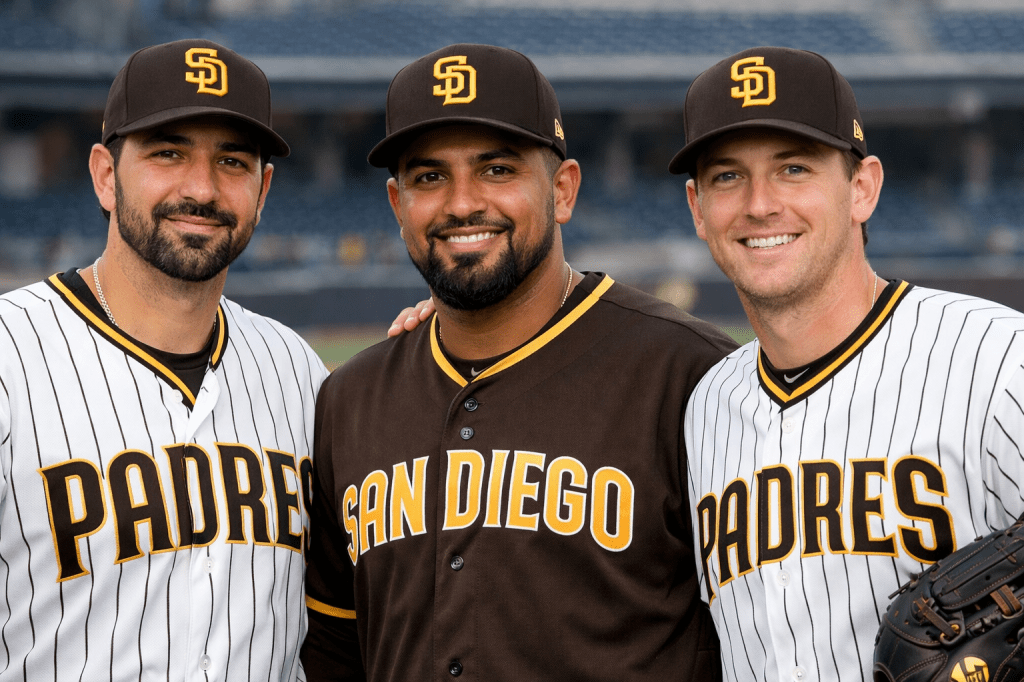
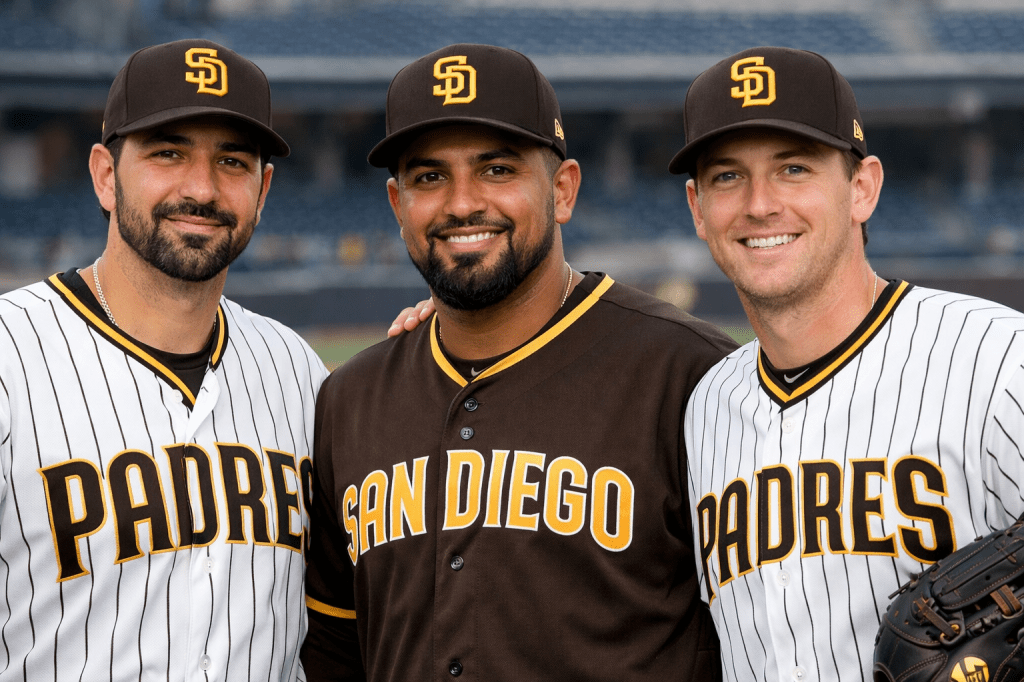
Nick Castellanos • Germán Márquez • Griffin Canning
The Padres have been busy — and not in the “headline splash” way. This is the kind of busy that tells you exactly how A.J. Preller wants to build this roster in 2026: short commitments, controlled risk, and upside bets that widen the margin.
In the last couple days, San Diego has added a veteran bat with legit track record plus two veteran arms with very different paths to value. None of these moves are about “saving the season.” They’re about raising the floor, creating competition, and giving the roster more ways to win games in April and May without boxing themselves in financially or blocking future options.
1) Nick Castellanos: The Low-Risk Bat That Changes the Daily Options
What the Padres did: Signed Nick Castellanos to a one-year deal at the MLB minimum (reported $780K), with Philadelphia covering the rest of his 2026 salary. That matters because it turns a “big name” into a pure value play.
What he brings: This is still a professional hitter with a long resume. Castellanos is a two-time All-Star and a career run producer who has lived in the middle of lineups for years. Even in a down environment last season, he still posted 17 HR and 72 RBI. The upside is obvious: if he hits like a league-average corner bat (or better), the Padres stole production for basically nothing.
How he fits in San Diego:
- Primary path: DH and corner outfield rotation.
- Secondary path: Matchup-based starts depending on roster construction and health.
- What he is NOT: A savior signing, or someone you force into an everyday defensive role if it doesn’t fit.
The real reason this works: The Padres didn’t buy the “name.” They bought the outcome range. This is a one-year runway where Castellanos can chase his next contract — and the Padres can extract offense without carrying long-term risk.
Risk factor: Defense and volatility. Castellanos can still help you win games with the bat, but you can’t pretend the glove is suddenly elite. This move only plays if the Padres keep his role smart: maximize the bat, manage the defense.
2) Germán Márquez: Rotation Insurance With a Clear “If-Healthy” Ceiling
What the Padres did: Agreed to a one-year deal with Germán Márquez, pending a physical.
What he brings: Márquez isn’t a mystery arm — he’s a decade-long Rockies starter with real mileage, including an All-Star season (2021). His career line is what you’d expect from a long-term Coors Field starter: a mix of quality stretches and rocky patches, with a career ERA around the mid-4s.
Why the Padres are doing this: This is about innings and survivability over a 162-game season. If you’ve watched the Padres long enough, you know how fast a “set rotation” turns into a scramble by mid-summer. Márquez gives them another path to cover starts without burning the bullpen or rushing younger arms.
The key swing factor: Health and form. Márquez’s recent seasons have been disrupted (including Tommy John surgery), and his 2025 results were rough. That’s why this is a buy-low profile: the Padres aren’t paying for the peak — they’re paying for the possibility of usable innings with upside if the bounce-back hits.
What success looks like:
- Be a dependable back-half starter or a multi-inning stabilizer.
- Give the staff breathing room when schedules tighten.
- Turn “bullpen chaos weeks” into “bullpen manageable weeks.”
3) Griffin Canning: The Quiet Upside Play (And the Flexible One)
What the Padres did: Agreed to a one-year deal with Griffin Canning, pending a physical, as he continues recovering from a ruptured Achilles tendon.
Why this one matters: If Castellanos is the “headline” and Márquez is the “innings” play, Canning is the chess move.
Canning showed real value in 2025 with the Mets before the injury ended his season: 7–3, 3.77 ERA in 16 starts. That’s not ace talk — but it is “this guy can help you win games” talk, especially when your season inevitably turns into a pitching depth test.
How he fits:
- Best-case: Returns healthy and competes for a rotation spot.
- Realistic path: Starts as depth, ramps up, and becomes either a starter or a long-relief weapon.
- Value trait: Role flexibility. The Padres can deploy him based on need, not labels.
Risk factor: Timeline. Achilles recovery is real, and you can’t pencil him into Opening Day without seeing the ramp. But on a one-year structure, the Padres are again doing what they’ve done all winter: buy optionality.
The Big Picture: This Is Preller Building “Margin”
Put these three moves together and the message is clear:
- Castellanos gives the lineup a new shape and more daily options — at minimal cost.
- Márquez helps the Padres survive the inevitable stretch where you’re short on starters.
- Canning is the upside depth arm who can become a real contributor if health cooperates.
None of these moves guarantee anything. But that’s not the point. The point is the Padres just created more paths to a functional roster without locking themselves into long-term money or cornering themselves before the season even starts.
Translation: These aren’t “headline” acquisitions. These are “win the margins” acquisitions — and over 162 games, margins decide seasons.
What do you think? Are you buying the Castellanos bounce-back, and which arm do you trust more to actually give San Diego meaningful innings — Márquez or Canning?
 FriarPulse
Leave a comment