
By @VisualTejeda – FriarPulse
Published April 09, 2025 — 2:14 PM (PST) — Carlsbad, California
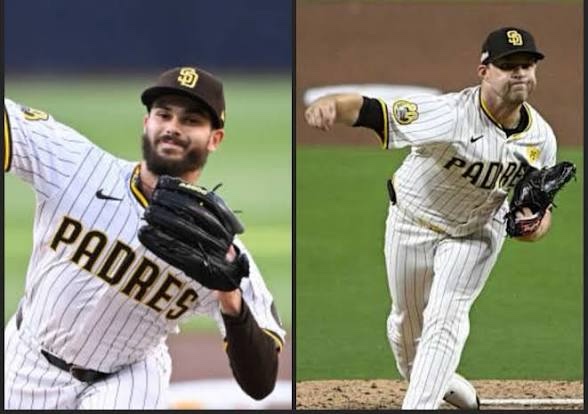
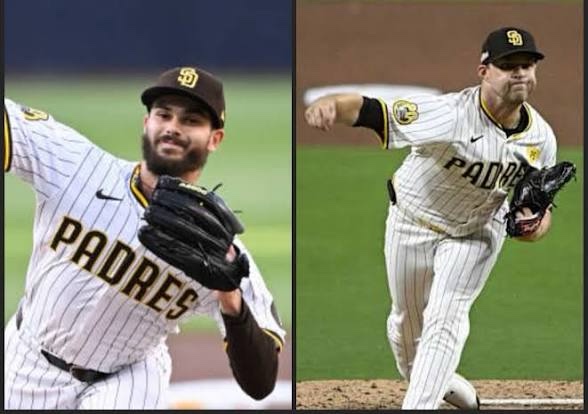
The Padres entered this offseason knowing their pitching staff would face difficult decisions, but Wednesday’s news delivered the clearest signal yet that significant changes are underway. Both Dylan Cease and Michael King officially declined the club’s one-year, $22.025 million qualifying offers, positioning the two right-handers to enter free agency and almost certainly depart San Diego.
For a franchise already navigating rotation uncertainty—and coming off a season where payroll reductions shaped every move—these decisions carry substantial implications for the 2026 roster construction and long-term strategy.
Two Departures, Two Different Storylines
Cease, acquired in a major trade intended to stabilize the rotation, pitched well enough to secure a competitive market and was never expected to accept a one-year stopgap offer. His ceiling, consistent strikeout profile, and age make him one of the more attractive free-agent arms available.
King, meanwhile, provided innings and flashes of mid-rotation reliability, but his decline of the QO signals his interest in securing multi-year stability—something the Padres, given their shifting payroll structure, may be unwilling to guarantee.
Draft Compensation—But Limited Value
Because both pitchers rejected qualifying offers, the Padres will receive compensation draft picks if Cease or King sign elsewhere. However, due to surpassing the Competitive Balance Tax threshold last season, San Diego’s compensatory picks will fall after the fourth round, limiting their impact compared to higher-slot selections.
While still beneficial from a long-term perspective, these picks will not meaningfully replace the immediate value of two departing rotation arms.
A Significant Rotation Gap for 2026
San Diego’s rotation now sits in a fragile state. Yu Darvish is expected to miss the 2026 season, internal options remain unproven, and the organization lacks ready-made, high-floor arms in the upper minors. Losing both Cease and King leaves the Padres without two of last season’s most dependable starters.
The front office is now tasked with rebuilding a rotation that requires:
- At least two major-league–ready starters
- Reliable innings behind top prospect Adam Mazur’s departure and evolving bullpen roles
- Market efficiency amid financial recalibration and looming ownership transition
Strategic Direction: Value, Depth, and Cost Control
The Padres’ offseason may not revolve around marquee names. With Cease and King departing, the club appears positioned to pursue younger, controllable arms via trade and mid-tier free agents with strong underlying metrics but lower price tags.
The Padres’ baseball operations group has long targeted undervalued pitchers—those with strikeout upside, emerging pitch shapes, or fixable mechanical inefficiencies. Expect that philosophy to take center stage again as San Diego attempts to rebuild a competitive rotation without sacrificing long-term flexibility.
The Bigger Picture: A Transitional Year Ahead
San Diego isn’t committing to a rebuild. But the departure of two major rotation pieces signals a period of recalibration—both financially and structurally—as the franchise navigates ownership questions and roster turnover.
For 2026, the Padres will need to blend internal development with targeted acquisitions to remain competitive in a division headlined by aggressive spending and pitching-heavy rivals.
Bottom Line
In declining their qualifying offers, Dylan Cease and Michael King opened a new chapter for both themselves and the Padres. For San Diego, it marks the start of an offseason defined by tough choices, a need for creativity, and the pressure to rebuild a pitching staff capable of keeping the club competitive in 2026 and beyond.
 FriarPulse
Leave a comment